Rock Anchoring Contractors for Construction Projects
Rock anchoring transfers tensile forces from a supported structure or reinforcement system into a suitable rock formation through the designed anchor arrangement. The rock mass, discontinuities, groundwater and structural connection influence the system selected for a project.
Tiara accepts enquiries for rock anchor installation, rock anchor drilling, grouted rock anchoring and foundation rock anchors against the approved project requirements. Applications may include foundation tie-downs, anchored retaining structures, basement-support interfaces, industrial foundation anchoring and engineered rock-slope reinforcement.
Provide the actual rock investigation and design actions when requesting a rock anchoring quotation. A nearby rock exposure does not establish the condition or resistance of the proposed anchor bond zone.
Soil Anchoring Services and Ground Anchor Installation
Soil anchoring services involve installing the specified anchor system into suitable ground to transfer tensile loads through an engineered arrangement. Soil anchors may support excavation-retaining systems, retaining structures and other applications established by the project designer.
For soil anchoring contractors, the useful starting information includes the ground profile, groundwater, supported structure, anchor layout and required performance. The quotation should identify the construction responsibilities for drilling, tendon installation, grouting, testing and any specified stressing.
Tiara reviews enquiries for soil anchor installation, grouted soil anchoring, ground anchoring and tieback anchor construction for the actual project site. Anchor length, inclination, spacing and capacity follow the project engineering rather than a standard arrangement applied to every location.
Grouted Rock Anchors
Grouted rock anchors use a specified grouted connection to transfer load into the rock through the designed system. Enquiries may describe these as cement-grouted rock anchors, drilled and grouted rock anchors, rock anchor installation or rock anchoring with grouting.
The construction brief should identify the investigation, relevant groundwater, anchor type, tendon requirements, specified drilled length, bond arrangement, anchor-head connection, grout requirements and acceptance programme.
Fully bonded reinforcement and prestressed rock anchors are different arrangements. Confirm which system the drawings require before assigning the installation and testing scope.
Grouted Soil Anchors
Grouted soil anchors require the ground investigation, approved anchor design and a defined construction specification. Gravity grouting, pressure grouting and post-grouting describe different arrangements; the specified process must suit the actual system and ground.
For grouted soil anchoring services, identify the drilling conditions, tendon arrangement, grout specification and required verification. State whether casing, obstruction handling or other associated work forms part of the requested package.
Ground anchor grouting is not automatically a general ground-improvement or waterproofing treatment. Any separate ground treatment, seepage control or dewatering requirement needs its own scope.
Soil Nailing Services in India
Tiara Infrastructure Limited provides soil nailing services in India for engineered excavation-support and slope-reinforcement requirements. Soil nailing contractors need the ground investigation, excavation or slope geometry, groundwater information and approved reinforcement layout to define the construction package.
Soil nails generally act as passive reinforcement: resistance develops with movement of the reinforced ground. They should not be described as prestressed tieback anchors. The design establishes nail layout, inclination, length, materials, durability, facing and drainage requirements.
Send the drawings and quantities for a soil nailing quotation covering the agreed drilling, nail installation, grouting, connections and testing. State whether facing, mesh, shotcrete and drainage are included or provided under separate packages.
Grouted Soil Nails and Soil Nail Drilling
Grouted soil nailing enquiries may specify drilled and grouted nails, solid-bar soil nails or another expressly designed system. Identify the required materials and installation method rather than assuming one system suits every ground condition. Self-drilling hollow-bar nails, where specified, require their own approved details and confirmed construction arrangement.
For soil nail drilling and grouting, provide the investigation, available working positions, nail schedule and required records. The offer should distinguish reinforcement supply, drilling, grouting, head plates or connections, facing interfaces and specified verification. Soil nail pullout testing and acceptance follow the project specification; a prestressed anchor stressing programme is not automatically the appropriate procedure for soil nails.
Inclined Grouted Anchoring Services in India
Inclined grouted anchoring describes anchors installed at a designed inclination in soil or rock. The word inclined identifies geometry; it does not by itself specify whether the system is prestressed, fully bonded, temporary or permanent.
Tiara accepts inclined anchor drilling, inclined grouted soil anchoring and inclined grouted rock anchoring enquiries for the approved project requirement. Applications may include anchored retaining structures, excavation tiebacks, engineered slope support and specified foundation tie-down arrangements.
Provide the anchor alignment, tendon details, free and bonded lengths where applicable, structural connections and test requirements. The responsible engineer sets the inclination and layout from the ground and structural requirements. No standard drilling angle, length or capacity is assumed for every site.
Inclined Grouted Soil Anchors
Inclined grouted soil anchors require the soil investigation, groundwater information, approved anchor schedule and details of the supported wall or structure. The construction brief should identify the designed alignment and how the anchor connects to the retaining system.
For prestressed inclined soil anchors, identify the specified tendon, free length, bond length, corrosion protection, stressing and testing requirements. For another system, provide its own approved details. An inclined grouted bar should not automatically be described as a prestressed ground anchor.
Check underground services, property limits and any required offsite rights before adopting the alignment. The quotation should allocate drilling, materials, grouting, connections, testing and any associated wall or waler work.
Inclined Grouted Rock Anchors
Inclined grouted rock anchoring needs investigation of the actual rock mass and a defined structural load path. Discontinuities, groundwater and the proposed bond zone are relevant to the engineering assessment; the presence of visible rock at the surface is not enough to specify the system.
Share the designed anchor direction, tendon arrangement, bond details, head connection, service-life requirements and verification programme. The installation scope may include inclined rock drilling, tendon placement, cement grouting and specified testing, with stressing and lock-off where required by the selected prestressed system.
Rock bolts, fully bonded dowels and prestressed rock anchors remain distinct reinforcement arrangements. Identify which is required in the drawings and construction offer.
Soil Nailing Slope Facing and Drainage Interfaces
A soil nail wall or nailed slope is a coordinated system. Reinforcement, nail-head connections, facing, drainage and construction sequence need to follow the approved design. Soil nailing with mesh and shotcrete, where specified, should identify who supplies and executes each component.
Provide access and working-platform information, the released excavation stages and any monitoring requirements. Water management and the stability of construction stages require their own project assessment. Nail installation alone does not define the complete slope or excavation-support package.
For soil nailing cost per metre or an inclined grouted anchoring quotation, send the specified system, lengths, quantities, ground investigation, facing and drainage scope, testing requirements and intended programme. These details establish a comparable offer.
Temporary and Permanent Ground Anchors
Temporary and permanent anchors have different service-period and durability requirements. The project specification establishes the intended life, corrosion protection, materials, detailing and verification appropriate to the system.
Enquiries can identify temporary ground anchoring, permanent ground anchors, prestressed anchors, bar anchors, strand anchors, tieback anchors and foundation tie-down anchors. These terms define aspects of a requirement; they are not interchangeable specifications.
Confirm the exact system, materials and execution obligations in the accepted proposal, including testing and any specified stressing or lock-off activities.
Basement Anchoring and Excavation Shoring
Basement anchoring and excavation tieback anchoring need coordination with the complete retaining system. The wall, anchor heads, walers, connections and excavation stages should form a consistent engineering arrangement.
For enquiries involving anchored sheet pile walls, contiguous pile walls or another retaining system, provide the relevant drawings and support levels. Identify the responsibilities for the wall, anchoring, structural connections, excavation sequence and monitoring.
Where proposed anchors extend beyond the client’s property, establish permissions, land rights and utility constraints before adopting that layout. Drainage, dewatering and seepage-management requirements must be considered alongside the excavation-support design.
Foundation Anchoring and Uplift Resistance
Foundation anchoring, uplift anchors and rock tie-down anchors require a defined connection between the structure and the resisting ground. Send the foundation drawings, tensile design actions, ground investigation, required anchor arrangement and durability requirements.
The anchor must be assessed as part of the complete load path. Suitability cannot be established from tendon strength or drilled length alone. The construction offer should identify the anchor-head and structural-connection interfaces and the required testing and acceptance responsibilities.
Retaining Wall and Slope Anchoring
Retaining wall anchoring should identify how forces transfer through the wall, connections and anchors into the ground. Provide the structural layout, site levels, investigation and required construction sequence.
For slope anchoring and rock-slope reinforcement enquiries, include the slope geometry, relevant ground information, drainage provisions and approved reinforcement arrangement. Soil nailing, rock bolting, rock dowels and prestressed ground anchors can serve different engineering purposes.
Soil nails generally provide passive reinforcement and should not be described as identical to prestressed tieback anchors. Identify each required system separately in the drawings and quotation.
Anchor Drilling Grouting Stressing and Testing
The anchoring scope should allocate drilling, tendon installation, grouting, testing and any specified stressing. Confirm working positions, drilling conditions, casing requirements and the treatment of obstructions in the construction offer.
For grouting, identify the approved materials, process, records and verification. Stressing and lock-off belong in the scope where the specified prestressed system requires them. The test programme should define equipment, access, witnessing, reporting and acceptance responsibilities.
Establish the required drilling logs, material records, grout records, test results and as-built information for handover. The responsible engineer and project specification determine test loads, acceptance criteria and construction requirements; no universal capacity or numerical procedure applies to every anchor.
Rock Anchoring Cost and Soil Anchoring Rates
Rock anchoring cost, soil anchoring rates and ground anchor installation charges depend on the actual project specification. Ground conditions, anchor system, length, materials, corrosion protection, quantity, access, grouting, testing and mobilisation affect the quotation.
An anchoring rate per running metre is meaningful only when its inclusions are defined. Packages may use a per-anchor, per-metre or other agreed measurement basis. Confirm the treatment of obstructions, changed ground, additional quantities and standby.
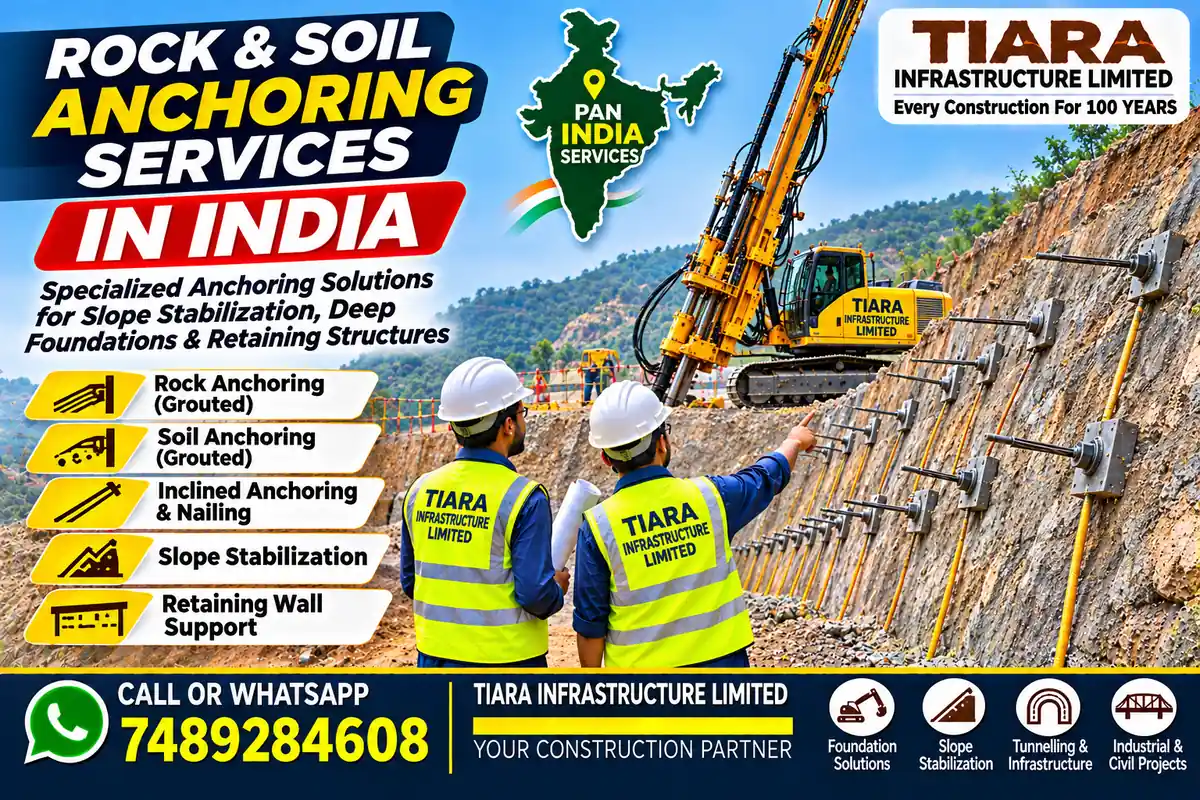
Request an itemised quotation identifying material supply, drilling, installation, grouting, stressing, testing and associated work. For rock anchoring rates or soil anchoring quotations, call 7489284608.
Anchoring for Industrial and Infrastructure Construction
Tiara accepts rock and soil anchoring enquiries for industrial construction, commercial developments and infrastructure works where the engineering requires the relevant system. The project brief may identify factory foundations, industrial excavations, retaining structures, building basements, transport-related structures or engineered slopes.
For an operating industrial premises, include live services, access controls, released work areas and restrictions affecting construction. For an urban basement, show neighbouring structures, plot boundaries and available installation positions. For a remote project, provide the receiving route, working area and material-delivery arrangements.

.webp)